The next phase of the battery race won’t be decided solely by where battery cells are assembled. It will be decided upstream, by how the critical materials inside those batteries are sourced, manufactured, and brought to commercial scale.
Across recent conversations with government leaders, investors, and industry partners, a common theme continues to emerge: the United States needs to move faster to establish secure, cost-competitive battery supply chains. But doing so requires more than replicating conventional manufacturing processes or constructing new facilities.
It requires rethinking how we industrialize advanced materials technologies in the first place.
At Sylvatex, that conviction is shaping our next phase of growth, and it is at the heart of our expanding strategic partnership with ONEJOON, a South Korean leader in industrial thermal processing equipment and battery materials manufacturing engineering.
A Meeting of Minds on the Future of Manufacturing
We recently welcomed ONEJOON leadership to our Alameda, California, laboratories for discussions on how to accelerate the transition from advanced materials innovation to commercial production in the United States.
The visit brought together ONEJOON’s Sung Je Lee, Jan-Phillip Schmiing, and Miran Kwon with Sylvatex’s CEO Virginia Klausmeier, CTO Mel Luetkens, Sylvatex Advisors (Celina Mikolajczak & Jun Shin) and Board Director Shane Khoh.
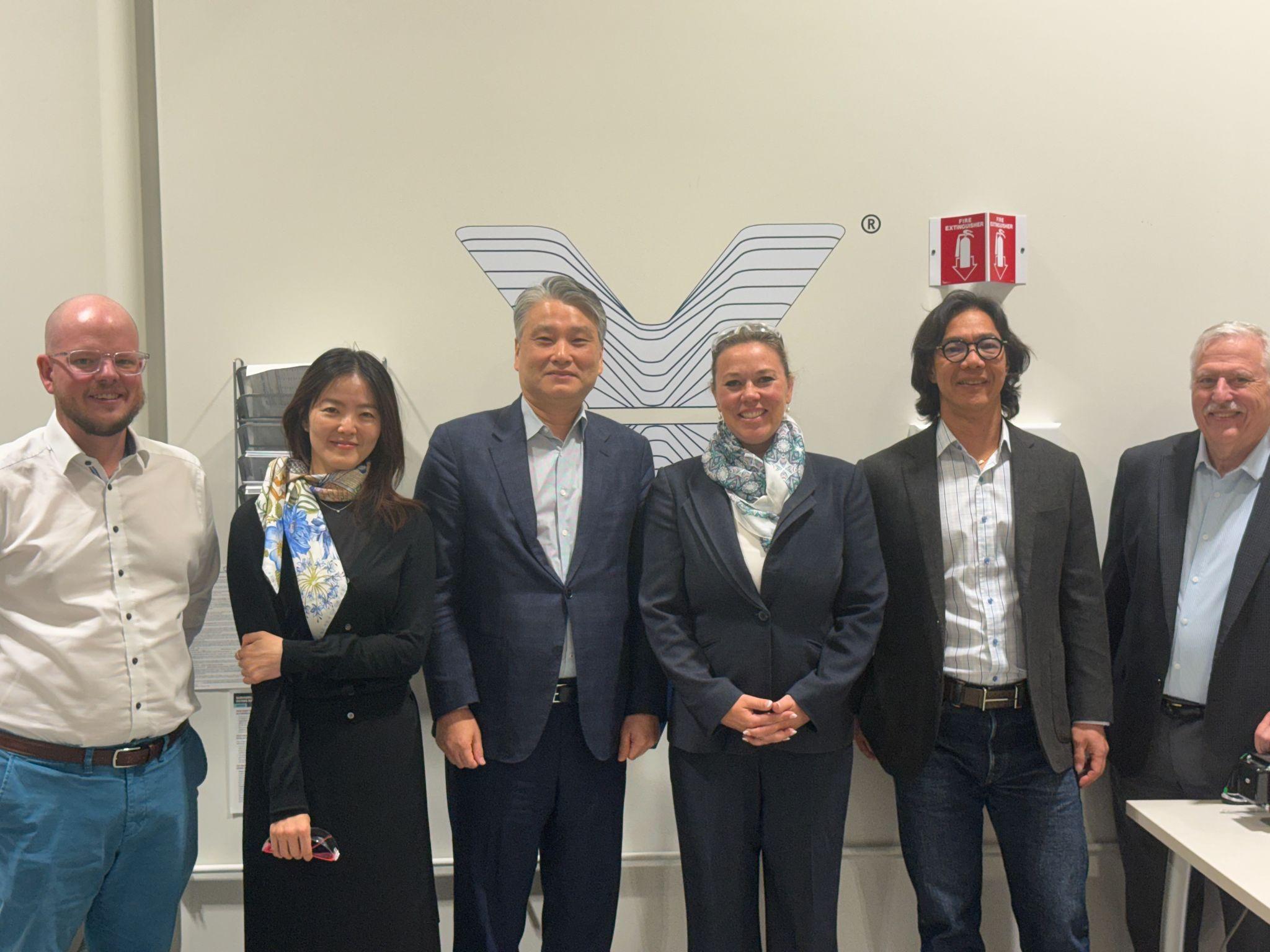
What emerged was more than a discussion of equipment specifications or manufacturing timelines. It was a shared perspective on what the next generation of battery materials manufacturing should look like, and how companies with complementary capabilities can work together to bring it to market faster.
ONEJOON brings extensive experience in commercial battery materials production, including the equipment, engineering, and operational knowledge required to manufacture at industrial scale. Sylvatex brings a fundamentally different approach to cathode active material (CAM) production, designed to reduce manufacturing complexity, cost, energy consumption, and reliance on conventional precursor supply chains.
Together, we see an opportunity to build something that neither technology innovation nor traditional equipment procurement can deliver alone.
Moving Beyond the Traditional Equipment Supplier Model
One of the most significant challenges facing advanced manufacturing companies is the transition from laboratory validation to reliable, economically competitive industrial production.
Traditionally, technology developers advance their processes independently before engaging equipment suppliers and engineering firms to design and construct production facilities. That separation can introduce substantial engineering risk, capital requirements, and delays when processes must be adapted to commercial equipment.
Our collaboration with ONEJOON takes a different approach: bringing the equipment manufacturer and industrial engineering expertise directly into the commercialization strategy from the beginning.
Building on our strategic partnership announced in August 2026, the companies have formalized a Process Development Agreement establishing a collaborative framework for industrial trials, toll production, process engineering, and commercial manufacturing development.
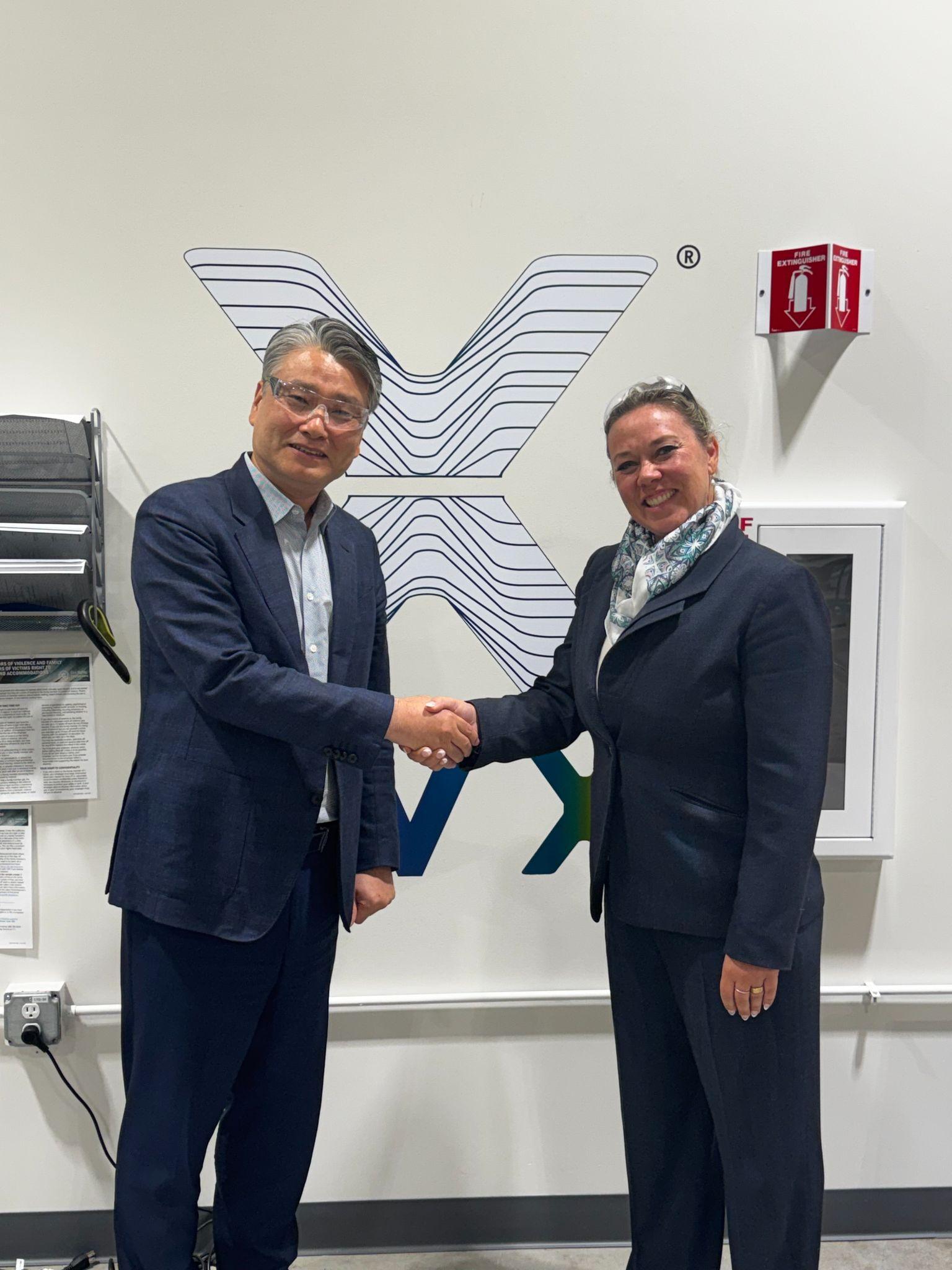
ONEJOON is contributing more than manufacturing equipment. Its engineering teams, technical expertise, and development resources are directly supporting the work needed to translate Sylvatex’s process into an industrial manufacturing platform.
The collaboration also extends into planning for future demonstration facilities, commercial deployment, and potential financing pathways.
This integrated approach creates opportunities to validate manufacturing performance on representative industrial equipment, establish reliable production economics, and make more informed investment decisions before committing significant capital to commercial facilities.
For Sylvatex, it means advancing industrial readiness and customer qualification alongside the engineering work required to scale, rather than treating them as separate stages.
Global Expertise, Shared Commitment to U.S. Manufacturing
There is particular significance in this collaboration being led alongside a South Korean industrial partner.
South Korea has helped build one of the world’s most sophisticated battery manufacturing ecosystems. ONEJOON’s experience supplying equipment and engineering solutions across established battery materials markets provides valuable insight into what it takes to compete at scale.
Its commitment to working with Sylvatex reflects a shared conviction that the U.S. market represents a significant opportunity for a new generation of battery materials manufacturing.
But building a competitive American battery industry requires addressing the supply chain from the ground up.
Today, much of the global LFP cathode supply chain remains concentrated in China, including the production of iron phosphate precursors used in conventional manufacturing.
Sylvatex’s proprietary solid-state, precursor-free process is designed to eliminate that conventional intermediate step, enabling a pathway to LFP production using more accessible domestic feedstocks while reducing process complexity and manufacturing costs.
When paired with ONEJOON’s industrial equipment and process engineering capabilities, this creates an opportunity to establish domestic production without simply recreating the complex manufacturing infrastructure that has historically shaped the industry.
It is a compelling example of how collaboration between U.S. technology innovators and experienced international industrial partners can strengthen American manufacturing capacity and supply chain resilience.
The Business Case Isn’t Red or Blue
Across our recent conversations with government agencies, investors, defense organizations, and battery industry leaders, a recurring theme continues to emerge: the United States needs more secure domestic manufacturing capacity, and that capacity must be economically competitive.
The motivations may differ. National security leaders are focused on supply chain vulnerabilities and reliance on foreign adversaries. Energy developers need affordable, reliable batteries. Manufacturers need competitive input costs and dependable supply. Investors need scalable businesses with credible paths to profitability. Others prioritize American jobs, energy efficiency, and environmental performance.
These priorities aren’t competing objectives. They’re different reasons to pursue the same outcome.
The growing bipartisan interest in strengthening domestic battery materials production, reflected in legislation introduced in 2026, reinforces how broadly this opportunity is recognized.
But government policy alone cannot build a competitive manufacturing industry.
The strongest manufacturing strategies must make economic sense regardless of who occupies the White House, which policies are in favor, or which market is growing fastest.
That is what Sylvatex is working to demonstrate.
Cost competitiveness, supply chain resilience, and environmental performance should not be treated as tradeoffs. They can be complementary advantages of a fundamentally better manufacturing process. And when those advantages are built into the underlying economics, the opportunity extends beyond any single market, political administration, or national border.
This is also what makes our collaboration with ONEJOON so compelling. An experienced South Korean and German based industrial leader recognizes the potential of Sylvatex’s technology and the opportunity to build a competitive manufacturing platform in the United States.
Our shared objective is not simply to respond to today’s market demands or policy priorities. It is to establish a manufacturing model that can compete on its own merits and remain relevant as those priorities evolve.
The business case crosses political lines and international borders. The next challenge is turning that shared conviction into commercial production.
Building a Faster, More Flexible Path to Commercialization
Our joint focus is now on translating that vision into an executable manufacturing strategy.
Through industrial equipment trials, toll manufacturing opportunities, front-end engineering, and evaluation of existing manufacturing infrastructure, Sylvatex and ONEJOON are pursuing multiple pathways to reduce the time and capital required to reach commercial production.
This approach can create earlier opportunities to produce representative material for customer qualification while advancing the engineering and economic validation needed for larger U.S. manufacturing facilities.
It also provides a more disciplined way to manage scale-up risk. Rather than relying on a single large capital investment, each stage can generate the technical performance data, operating experience, and cost information needed to inform the next.
For customers across energy storage, defense, mobility, and other critical applications, this means a clearer pathway toward qualified, cost-competitive domestic cathode material supply.
For investors and government partners, it represents a commercialization model built around coordinated execution, experienced industrial participation, and more deliberate deployment of capital.
“Rebuilding America’s battery supply chain requires more than breakthrough technology. It requires a different way of bringing that technology to market. What makes our relationship with ONEJOON so valuable is that we’re working together on the entire path to commercialization, combining our manufacturing innovation with their deep industrial expertise to move faster, reduce risk, and establish competitive production here in the United States.” Virginia Klausmeier, Founder and CEO, Sylvatex
A Shared Vision for What Comes Next
The opportunity to rebuild America’s battery supply chain is significant, but capturing it will require new forms of collaboration across technology developers, industrial manufacturers, investors, and government.
For Sylvatex and ONEJOON, our partnership represents a shared commitment to that challenge.
We are combining American manufacturing innovation with the experience of an established South Korean industrial partner, aligning technology development with industrial execution, and pursuing a more flexible and capital-efficient path toward domestic production.
The goal is not simply to manufacture cathode materials in the United States.
It is to demonstrate a better way to build the manufacturing capacity America needs, with the right partners working together from the beginning.